How RF-star & Industries Are Moving Forward
  • Bluetooth Low Energy Module Practical Application Guide
    Bluetooth Low Energy Module Practical Application Guide Jan 28, 2026
    Ⅰ. What is a Bluetooth Low Energy Module? Physical Composition: Bluetooth Low Energy Module = BLE chip + essential peripheral circuits (crystal, capacitors, etc.) + RF section (antenna matching circuit) + shielding cover (for interference prevention). This complete package allows you to use it immediately without dealing with complex RF design. Simple Understanding: Bluetooth Low Energy (BLE) is like an "energy-saving version" of classical Bluetooth – it's specifically designed for small, battery-powered devices that need to run for long periods. For example, your smart bracelet, electronic scale, or anti-loss tags all rely on BLE technology to maintain connections while allowing the battery to last for months or even years. Module vs. Chip: How to Choose? Suggestion: For 90% of IoT products, using a module is more cost-effective. The saved development time and certification costs far outweigh the price difference of the module. Special Note: Common module certifications like FCC, IC, etc., require the module to include a complete RF circuit, shielding cover, and independent power supply. There are certain differences in whether a module's certification can be referenced depending on the region, the specific end product, and the chosen testing laboratory. To ensure smooth certification, RF-star recommends users directly communicate with the certification laboratory to confirm specific requirements. Ⅱ. What are the main types of Low Power Bluetooth modules on the market? 1. Classified by Function Transparent Transmission Module: The most commonly used, acts like a "data pipeline," transmitting data received via Bluetooth directly to the microcontroller. Users don't need to understand Bluetooth protocols, just wire it up and use it. Controller Module: Has its own processing capability and can be programmed for logic. Customers can write their own programs to utilize the chip's internal core, potentially saving an external MCU and reducing costs. For example, the RF-star RF-BM-2340B1 uses the TI CC2340R5, which has a built-in ARM Cortex-M0+ core, and all GPIOs are brought out, allowing it to handle both Bluetooth communication and user applications. RF-star Modules Classified by Chip Platform All the above modules can fulfill both transparent transmission and independent development needs. 2. Classified by Interface Serial Port Type (UART): Easiest to get started with, connect and use, e.g., RF-star RF-BM-2340A1. USB Type: Plug directly into a computer, no additional interface needed, customers develop their own PC software, e.g., RF-DG-22A. SPI/I2C Type: Differences in serial transmission rates, e.g., RF-BM-2340A2 supports SPI transparent transmission protocol, RF-BM-BG22Ax supports I2C transparent transmission protocol. RF-star Bluetooth Low Energy Module Interface Classification Table Ⅲ. Quick Start: How to Use a BLE Transparent Transmission Module? Wiring is Super Simple (Using RF-BM-2340A1 as an example) Note: TX connects to RX, RX connects to ...
    Read More
  • Evolution of Wireless Sensor Technology and PAwR Innovation
    Evolution of Wireless Sensor Technology and PAwR Innovation Jan 12, 2026
    Overview of Core Sensor Classifications and Typical Applications Physical Environment Sensing Sensors Motion State Monitoring: Accelerometers/gyroscopes are used in smartphones, drones, and industrial equipment vibration monitoring. Mechanical and Environmental Sensing: Pressure sensors are applied in automotive TPMS and industrial pipeline monitoring; temperature and humidity sensors are used in smart homes and agricultural greenhouses. Biochemical and Medical Sensors Environmental Quality Detection: Gas sensors are used for industrial safety and air quality monitoring; PM2.5 sensors are integrated into air purification equipment. Vital Signs Monitoring: Heart rate/blood oxygen sensors have become standard in wearable devices; continuous glucose monitoring systems are transforming diabetes management. Vision and Acoustic Sensors Image Sensing Systems: CMOS/CCD sensors drive smartphone cameras and security surveillance; infrared thermal imaging is used for body temperature screening. Acoustic Monitoring Networks: Microphone arrays enable intelligent voice interaction; ultrasonic sensors are applied in vehicle radar and medical imaging. The sensor market is trending towards miniaturization, low power consumption, and high integration. In 2024, the global market size exceeded $200 billion, with a compound annual growth rate (CAGR) exceeding 8%. Wireless RF Technology Matrix and RF-star Modular Solutions Wireless Technology Performance Comparison The PAwR Technology Revolution Breakthrough Advantages of PAwR Technology Architectural Innovation and Performance Leap Periodic broadcasting and precise response mechanisms achieve bidirectional communication with millisecond-level latency. Nanosecond-level time synchronization technology supports ultra-large-scale device collaboration. Intelligent collision avoidance algorithms improve channel utilization by over 3 times. Core Technical Parameter Comparison Power consumption reduced to 1/10 of traditional Bluetooth, extending device battery life from months to years. Connection density increased by 100 times, significantly boosting the number of devices supported by a single network. Cost is lower compared to existing RF solutions, creating economic feasibility for large-scale deployment. Deep Reshaping of Market Application Scenarios Smart City Infrastructure Upgrade Environmental Grid Monitoring: Deployment of hundreds of air quality nodes per square kilometer for real-time pollution source tracking. Industry 4.0 Comprehensive Sensing Network Predictive Maintenance Revolution: Real-time monitoring of each key component of every piece of equipment, with failure prediction accuracy >95%. Production Process Optimization: Workshop-level sensor density reaches 1 per square meter for real-time production parameter adjustment. Supply Chain Transparency: End-to-end status tracking from raw materials to finished products, reducing losses by over 15%. Continuous Health Monitoring Unobtrusive Health Monitoring:...
    Read More
  • How to Achieve Bluetooth Low Energy One-to-Many? Is Mesh Still Needed? An In-Depth Analysis of BLE 5.4's PAwR Technology and Practical Applications
    How to Achieve Bluetooth Low Energy One-to-Many? Is Mesh Still Needed? An In-Depth Analysis of BLE 5.4's PAwR Technology and Practical Applications Nov 10, 2025
    In the intelligent era of the Internet of Everything, are you still troubled by how to manage hundreds or thousands of smart devices? Traditional Bluetooth Low Energy connections have limited capacity, while Mesh networking is complex and power-hungry. These have become bottlenecks restricting the large-scale deployment of the Internet of Things. Leveraging the industry-leading Silicon Labs chip platform, RF-star Technology has launched a low-power module featuring PAwR functionality, truly achieving large-scale bidirectional one-to-many communication. Theoretically, a single central device can simultaneously perform bidirectional data exchange with up to 32,640 end devices, completely breaking through the device number limitations of traditional Bluetooth connections and making device management unprecedentedly simple and efficient. Now, let's witness how this technology can create new value for your business! Differences Between PAwR and Other Technologies: Traditional Connected One-to-Many: Typically refers to a host taking turns maintaining connections with a few to several dozen slave devices via time-division multiplexing. The number is limited, and management complexity increases significantly with the number of devices. Broadcast-Based One-to-Many: Uses a Broadcaster/Observer model. One device broadcasts, and numerous devices can receive. However, this is one-way; observers cannot reply, and all devices receive the broadcast, lacking privacy and targeting. Bluetooth Mesh Networking One-to-Many: Employs a "flooding" network management approach. Each node that receives a message forwards it, relaying it via other nodes until the target node receives it. Theoretically, a network can accommodate tens of thousands of nodes, enabling many-to-many communication. However, the network is complex, and power consumption and latency are difficult to control. PAwR One-to-Many: Stands for Periodic Advertising with Responses, a revolutionary feature introduced in the Bluetooth Core Specification version 5.4. According to the Bluetooth SIG specification, one PAwR Broadcaster can simultaneously engage in bidirectional communication with up to tens of thousands of PAwR Subscribers – an astonishing upper limit of 32,640. What is PAwR? How is PAwR Applied? In a PAwR system, the roles are somewhat reversed compared to what we are traditionally accustomed to. The Broadcaster acts as the central hub device, referred to as the Access Point (AP). The Scanner/Responder devices are typically the node devices. We can imagine it as a teacher (the Broadcaster) in a classroom asking questions to students according to a fixed, recurring schedule. This schedule is divided into a large number of extremely short time windows. The detailed workflow is as follows: 1. Establish Synchronization: The Broadcaster continuously sends a periodic advertising stream containing specific timing information. Thousands of Subscriber devices listen to this advertising stream and maintain ...
    Read More
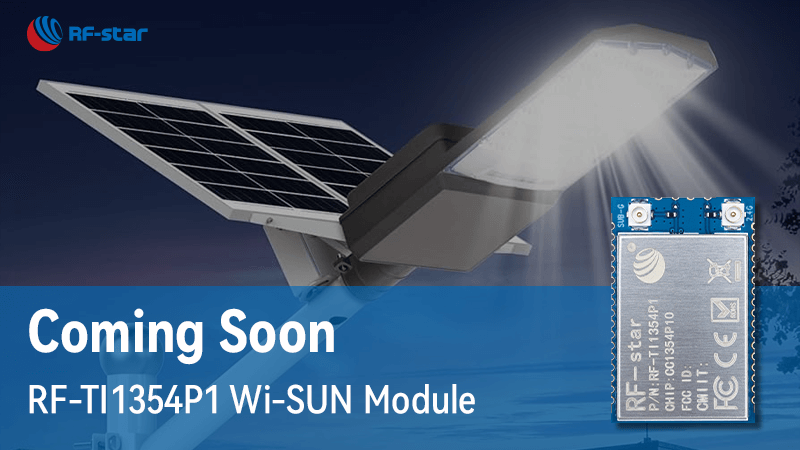
  • RF-star Unveils Upcoming RF-TI1354P1 Wi-SUN Module for Large-Scale IoT Networks
    RF-star Unveils Upcoming RF-TI1354P1 Wi-SUN Module for Large-Scale IoT Networks Aug 06, 2024
    RF-star, a leading global manufacturer of wireless modules, announces the upcoming release of its highly anticipated RF-TI1354P1 Wi-SUN module. Scheduled for launch in August, this innovative module based on TI CC135410 SoC, is poised to empower large-scale IoT deployments with its multiprotocol, dual-band capabilities, catering to the growing demands of smart cities, smart energy, grid infrastructure and industrial IoT sectors. Figure 1 RF-TI1354P1 Wi-SUN Module Is Coming Soon The RF-TI1354P1 module, promises to deliver a robust performance with wireless bands of 800 MHz - 928 MHz and 2.4 GHz. It can coexist and operate concurrently in multiple wireless stacks, eg. Bluetooth Low Energy 5.3, Matter, Thread, Wi-SUN, Zigbee protocol through a DMM driver. Equipped with 1024 kB Flash and 288 kB RAM, the Sub-1GHz transceiver is designed to operate as a border router, extending its reach to up to 300 border router nodes. In a mesh network, each device can establish multiple and robust connections with nearby devices. Its self-healing and self-configuration capacities provide a more robust network and reduced downtime for the thousands of connected nodes. This feature is particularly advantageous for complex, distributed IoT applications that require extensive connectivity and reliable data transmission. Figure 2 Wi-SUN mesh network topology “The introduction of the RF-TI1354P1 module marks a new era in IoT connectivity,” said Ben Qiu, GM of RF-star. “Its extensive nodes within a network will greatly enhance the scalability and flexibility of IoT solutions, making it ideal for smart city, grid infrastructures and industrial applications.” The RF-TI1354P1 module is expected to build upon the success of RF-star's existing Wi-SUN modules, including the RF-SM-1277B1 and RF-TI1352P2, which have already established a strong reputation for their low power consumption, high data throughput, and ease of deployment. The new module's dual-band capability and extended node support will further solidify RF-star's position at the forefront of IoT wireless communication technology. Figure 3 RF-star’s Wi-SUN Modules Support Border Router Node, Router Node, Leaf Node. As the global Wi-SUN technology market is predicted to grow at a CAGR of 13.45% between 2024-2032, the RF-TI1354P1 module's release could not be timelier. It aligns with the market's shift towards more interconnected and intelligent systems, particularly in the realms of smart cities and energy management. RF-star's dedication to innovation is evident in its development of high-performance Wi-SUN modules, which are set to empower a new wave of IoT applications. These advancements aim to enhance connectivity efficiency, reduce costs, and ultimately improve the user experience. For more information on RF-star and its upcoming Wi-SUN module, please visit www.rfstariot.com About RF-star Shenzhen RF-star Technology Co., Ltd (RF-star) is a leading global provider of wireless communication modules and solutions, ...
    Read More
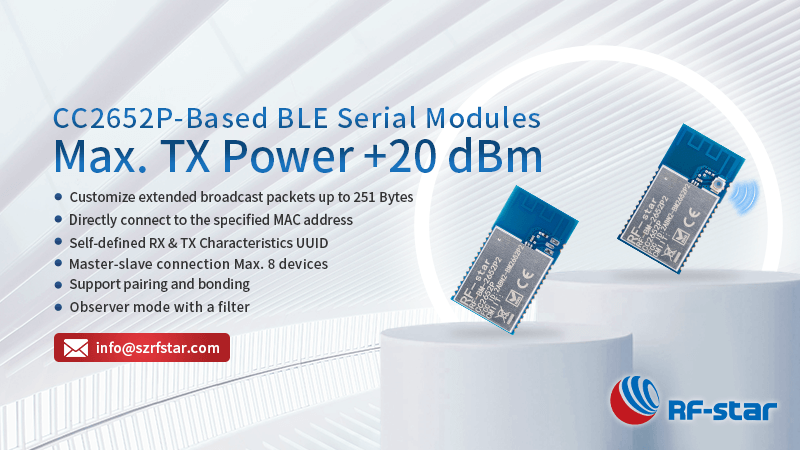
  • RF-star Launches Bluetooth UART Protocol for CC2652P High-Power BLE Modules RF-BM-2652P2/P2I
    RF-star Launches Bluetooth UART Protocol for CC2652P High-Power BLE Modules RF-BM-2652P2/P2I Jul 11, 2024
    Shenzhen RF-star Technology Co., Ltd. (RF-star), a leading wireless module manufacturer, has released its latest Bluetooth UART transparent transmission protocol for CC2652P-based BLE modules RF-BM-2652P2 and RF-BM-2652P2I. This new offering is set to revolutionize the landscape ofhigh-power Bluetooth Low Energy (BLE) modules, by providing developers with robust, long-range wireless solutions tailored for multi-connectivity needs. Enhanced Connectivity with High-Power BLE Modules BLE technology, renowned for its low power consumption and ease of use, has long been a cornerstone of short-range wireless communication. However, as the demand for long-range connectivity in smart home and industrial automation applications grows, the need for high-transmit power BLE devices has become increasingly apparent. RF-star's CC2652P modules, RF-BM-2652P2 and RF-BM-2652P2I, feature a built-in power amplifier with a maximum transmit power of +20 dBm. This extends the transmission range from the conventional 10 meters to hundreds of meters. The New Era of Bluetooth UART Transparent Transmission The introduction of Bluetooth 5.0 transparent transmission protocol -- essentially a serial port protocol -- is excellent news for developers. Equipped with this protocol, the modules can work in BLE master mode, slave mode, master-slave mode, and Beacon mode. Here are some standout features (AT commands) that make these modules a must-have for high-power applications: Adjustable Transmit Power: With 22 levels of transmit power adjustment ranging from -20 dBm to +20 dBm, developers can fine-tune the output power to suit their specific requirements, ensuring optimal performance without unnecessary power consumption. Multi-Device Connectivity: Supporting one-master and multi-slave connections, these modules can handle up to 8 devices simultaneously, making them ideal for complex networks and IoT ecosystems. Extended Broadcast Packets: Customizable extended broadcast packets of up to 251 bytes allow for more data to be transmitted in a single packet, enhancing communication efficiency. High UART Forwarding Rate: A maximum stable UART forwarding rate of 35 KB/s ensures that data transmission is swift and reliable, even in high-traffic scenarios. Observer Mode with A Filter: This feature allows users to monitor and filter specific parameters, offering greater control and deeper insights into the module's operations. Bluetooth Pairing and Bonding Support: Seamless integration with existing Bluetooth ecosystems is facilitated by support for pairing and bonding, ensuring compatibility with a wide range of devices Automatic Reconnection: The automatic reconnection ensures that the module maintains a stable connection, even in the face of temporary disruptions. Multi-Protocol Support: BLE5.2, ZigBee, Thread, etc. Beyond Bluetooth serial port capabilities, the RF-BM-2652P2 and RF-BM-2652P2I modules also support multiple protocols, including Bluetooth 5.2 Low Energy, T...
    Read More
  • RF-star's Bluetooth Digital Key Solutions Accelerate Intelligent Vehicle Ecosystem Innovation
    RF-star's Bluetooth Digital Key Solutions Accelerate Intelligent Vehicle Ecosystem Innovation Jun 11, 2024
    With the rapid development of automotive intelligence, digital keys are emerging as a global trend. Their deployment will transform travel and user experiences, reshaping the interaction between people and vehicles within the broader ecosystem. Digital keys, enhanced by Bluetooth® technology, transcend simple car access tools and serve as the initial connection in the smart car experience. Today, every new smartphone now comes equipped with Bluetooth digital key-enabling technology. This advancement enables users to seamlessly enjoy keyless entry, starting, locking, and other security features through their smartphones and smart devices. As a leading global provider of wireless modules and solutions, Shenzhen RF-star Technology Co., Ltd. (RF-star) was honored to be interviewed by Lori Lee, APAC Marketing Director of Bluetooth SIG. During the interview, RF-star’s Marketing Manager, Ms. Qianqian Wen, shared valuable insights into the market trends of digital keys and highlighted the pivotal role of Bluetooth technology in the intelligent vehicle ecosystem. Furthermore, we are eagerly anticipating the upcoming release of the Bluetooth Channel Sounding feature, which we believe will significantly enhance the performance of digital key solutions. Bluetooth SIG's Interview with RF-star In recent years, the new energy vehicle market has grown rapidly. How do you view the importance of digital keys and market trends? The digital key serves as the first connection point for users to experience intelligent cars. At this connection point, security, reliability, convenience, and interactive comfort are all indispensable. The success of the digital key experience design is crucial for car user evaluations and plays a key role in deepening the connection with users. With the maturity of technologies like Bluetooth® Low Energy (LE), near-field communication (NFC), and ultra wide band (UWB), digital keys are entering a period of rapid growth, and integrated solutions will become the market mainstream. What are the technological advantages of Bluetooth technology in digital key solutions? RF-star chose Bluetooth® technology to develop car digital key solutions, primarily because of its low power consumption, high reliability, and broad device compatibility. Bluetooth technology provides stable wireless connections and supports various smart devices like smartphones and smartwatches, enabling users to remotely control vehicles through these devices for keyless entry, starting, and other functions. Additionally, Bluetooth technology’s low power consumption helps reduce operating costs. RF-star also values Bluetooth technology’s iterative capabilities. For example, the upcoming channel sounding feature improves the positioning accuracy of Bluetooth Digital Key solutions and protects the system from relay hijacking. It may become a cost-effective preferred technology in the digital key domain in the future. With the upcoming release of the Bluetooth Chann...
    Read More
  • RF-star Redefines Automotive Wireless Solutions with New BLE Module Lineup
    RF-star Redefines Automotive Wireless Solutions with New BLE Module Lineup May 15, 2024
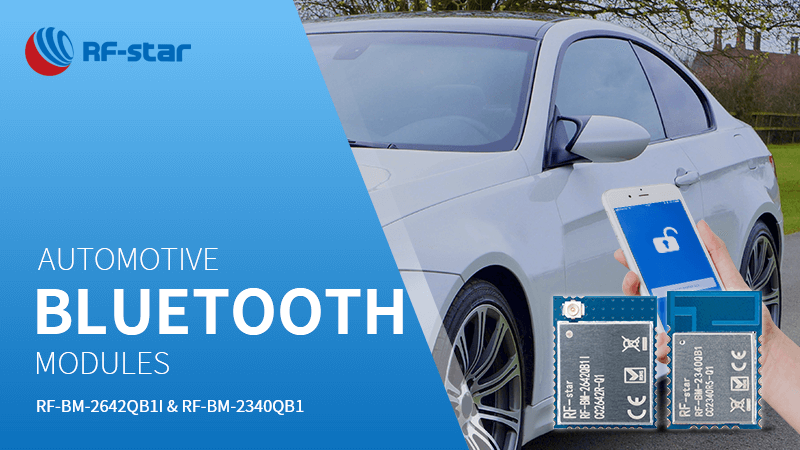
    RF-star, a leading manufacturer of wireless modules and provider of wireless connectivity solutions, proudly announces the expansion of its Bluetooth module lineup tailored specifically for automotive applications. The latest BLE modules include the RF-BM-2642QB1I and RF-BM-2340QB1, designed to excel in automobile-critical applications such as digital car keys, T-Box, Tire Pressure Monitoring Systems (TPMS), Passive Entry Passive Start (PEPS), and more. Designed to meet the evolving demands of the automotive industry, RF-star's new modules offer a host of features to enhance reliability, durability, security, and ease of integration. Compliance and security assurance are paramount in automotive applications. RF-star’s new Bluetooth Low Energy modules are based on TI chips, specifically the CC2642R-Q1 and CC2340R5-Q1 MCUs meeting Automotive Electronics Council (AEC-Q100) standards. RF-BM-2642QB1I and RF-BM-2340QB1 BLE modules integrated with the automotive-qualified MCUs can operate in Grade 2 temperature range (–40 °C to +105 °C), guaranteeing their reliability and durability in harsh automotive environments. Additionally, RF-star's CC2642R-Q1 and CC2340R5-Q1 modules incorporate AES 128-and 256-bit cryptographic accelerator, ECC and RSA public key hardware accelerator and true random number generator(TRNG). These advanced security enablers with robust encryption protocols and authentication mechanisms, provide peace of mind to both automakers and end-users. Rich resources and ease of use are also taken into consideration by project decision-makers. Their high-performance processor and abundant resources, eg., RF-BM-2340QB1 with 512 kB Flash and 36 kB RAM, offer ample opportunities for firmware development. Meanwhile, they also support over-the-air upgrade (OTA). Besides, the automotive modules feature UART, SPI, I2C, I2S, ADC and more digital peripherals, flexible RF output modes(eg., PCB antenna, IPEX connector and half-hole ANT RF pin), and user-friendly development kits. Hence, it is quite easy to integrate into existing vehicle architectures, especially the auto aftermarket applications. Best of all, both support Bluetooth 5.0 Low Energy serial port transmission for master-slave wireless connections. These rich functions with AT commands streamline the integration process, reducing complexity and accelerating time-to-market for automotive projects. Whether experienced engineers or newcomers to wireless connectivity, they can leverage RF-star's Bluetooth modules easily to unlock their full potential in ongoing projects. RF-star - A powerful supplier with abundant experience stands out among competitors. Certified with ISO9001 and IATF16949 (automotive sector quality management systems), the enterprise and the manufacturer meticulously adhere to international quality management standards. RF-star is also honored as a member of the Car Connectivity Consortium (CCC) and Intelligent Car Connectivity Industry Ecosystem Alliance (ICCE). Beyond indis...
    Read More
  • RF-star Showcased CC2340 Bluetooth LE Modules in TI Embedded Innovation Seminar
    RF-star Showcased CC2340 Bluetooth LE Modules in TI Embedded Innovation Seminar Dec 01, 2023
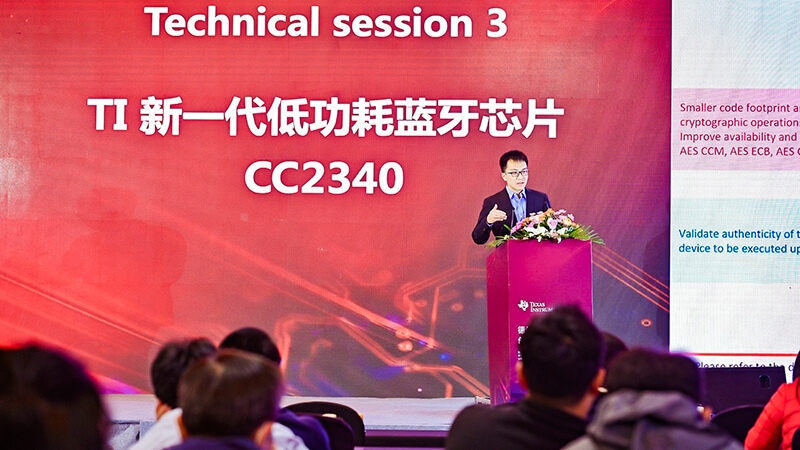
    On November 28-30, RF-star, a leading RF wireless modules manufacturer, is honored to present its new CC2340 Bluetooth Low Energy modules and solutions, at the TI Embedded Technology Innovation and Development Seminar (Shanghai and Shenzhen Station) organized by Texas Instruments, a global semiconductor giant. This premier event brought together industry leaders, experts, ecological partners and enthusiasts to explore the latest advancements and opportunities in TI’s new-generation embedded products and applications. As TI’s partner, RF-star was invited to attend the seminar and interacted with industry representatives to discuss the embedded technology trends. In this seminar, Texas Instruments showcased the new Arm® Cortex® -M0+MCU product portfolio, new-generation Sitara AM6x series processors, TI CC2340x Bluetooth LE MCUs and C2000TM Real-Time microcontrollers. TI’s experts also shared Wi-Fi 6 for IoT applications and low-power consumption Radar solutions. The leading wireless innovation, comprehensive embedded processor portfolio, cutting-edge system solutions, easy-to-use platforms and tools would help engineers develop and push their target projects to market quickly. RF-star presented the CC2340R5 wireless modules based on TI Bluetooth Low Energy MCUs in the seminar exhibition hall. RF-BM-2340B1(I), as RF-star’s first CC2340R5 series Bluetooth LE modules features high-quality RF performance, ultra-low power consumption, adequate security and competitive price. BLE5.0 transparent transmission protocol (serial port protocol), rich AT commands, and CE, FCC, BQB certifications, can simplify project development and accelerate the products to market. The CC2340 Bluetooth modules designed by RF-star enable wireless connectivity in building automation, grid infrastructure, medical devices, appliances, personal electronics, retail automation and more applications. The Bluetooth digital key, UWB digital key, T-Box, BMS, TPMS, Bluetooth charging pile and other vehicle solutions embedded RF-star wireless modules attracted attendees to engage in potential business cooperation. In the future, RF-star will explore wireless connectivity innovation in the automotive industry. The successful event not only brought great influence to TI's partner ecosystem but also played an important role in the development of embedded technology. Thanks to the impressive seminar, RF-star was pleased to forge new connections with industry experts and looked forward to working with TI partners to propel wireless technological innovation and expand more possible embedded applications. Click here for RF-star wireless modules RF-BM-2340x based on CC2340Rx. For more information, visit www.rfstariot.com or reach us by email address info@szrfstar.com. About RF-star Shenzhen RF-star Technology Co., Ltd (RF-star) is a leading global provider of wireless communication modules and solutions, specializing in low-power modules for IoT, industrial, automotive, and consumer appli...
    Read More
  • RF-star Joins Car Connectivity Consortium to Accelerate UWB Digital Keys
    RF-star Joins Car Connectivity Consortium to Accelerate UWB Digital Keys Nov 21, 2023
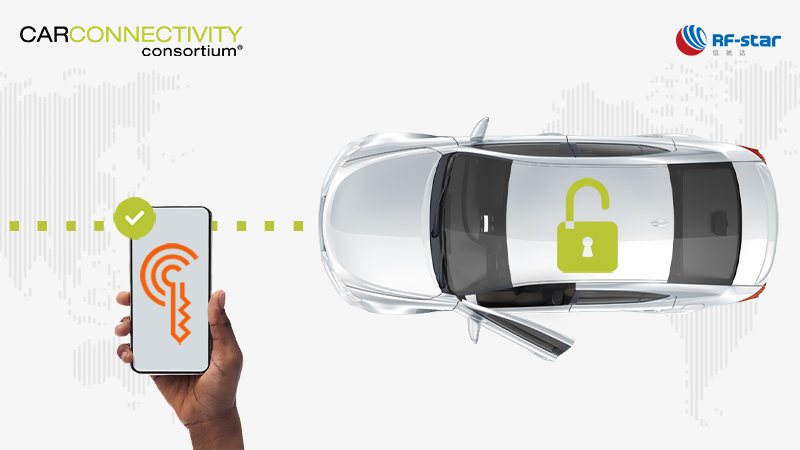
    Shenzhen, Guangdong, China, -Nov. 21, 2023 / -- RF-star, a leading provider of wireless module solutions, is pleased to announce its membership in the Car Connectivity Consortium (CCC) to further progress with the development of Bluetooth + Ultra Wide Band (UWB)+NFC digital keys for the automotive industry. In July 2022, the CCC launched the latest Digital Key Release 3 V 1.1. The universal cross-industry standard adds UWB in combination with Bluetooth® Low Energy connectivity and Near Field Communication (NFC) to have contactless, location-aware, and secure communication between smartphones and vehicles. RF-star, as a pioneer in wireless IoT technologies of BLE, UWB, NFC, ZigBee, Matter, Thread, Wi-SUN, etc. has been developing a complete set of automotive digital key solutions combined with the UWB, Bluetooth® Low Energy, and NFC technologies. UWB, a cutting-edge technology that utilizes radio waves to measure distances with extreme precision, is a key component of RF-star's digital key solutions. Integrated with UWB technology, the new solution based on its own automotive-grade chip modules not only ensures secure and reliable communication between smartphones and vehicles, but also enables advanced features such as accurate ranging and remote vehicle control. Since 2010, RF-star has been engaging in the wireless connectivity area, especially in BLE technology for more than 10 years. In former BLE PEPS solutions, RF-star several automotive-grade Bluetooth modules have been successfully installed into cars and mass-produced, such as low-power modules based on TI CC2642R-Q1. The previously released CC2340R5 module RF-BM-2340B1 and its subsequent CC2340 series modules are also suitable for digital key applications. This series of modules has made Bluetooth Low Energy car access antenna node reference design. Hence, RF-star's expertise in BLE technology and Bluetooth modules complements its UWB digital keys, easily achieving identity authentication, data interaction, and long-range positioning with ultra-low-power consumption. The combination of these technologies realizes a 40m-100m wake-up service and starts the engine with pinpoint accuracy within decimeter-level positioning. The introduction of UWB offers unparalleled convenience and security beyond today’s classic keys. What's more, as a new member of the Intelligent Car Connectivity Industry Ecosystem Alliance (ICCE) in the first half of the year, RF-star with major players had been fortunate to draft UWB System Requirements to advance the development of digital key systems. “With the implementation of the CCC digital key, the vehicle-to-device connectivity is imperative. It is a great honor to be a member of the CCC at this time and participate in the innovation of this wireless connectivity,” said King Kang, CEO of RF-star. “RF-star will propel unceasingly the development of the Internet of Vehicles industry and jointly build UWB ecosystem with global leading RF chipsets, carmakers...
    Read More
1 2 3

A total of 3 pages

Leave A Message

Leave A Message
If you are interested in our products and want to know more details, please leave a message here, we will reply you as soon as we can.

Home

Product

Teams

whatsapp